Qudsia Bagh is easy to pass without realising that an 18th-century Mughal garden once occupied this part of Delhi. The busy Kashmere Gate Metro station and ISBT now dominate the surroundings, but inside the green space are surviving structures from a garden complex created in 1748. The Delhi Department of Archaeology records that Qudsia Begum, mother of Mughal emperor Ahmad Shah Bahadur, built the garden on the bank of the Yamuna. Much of the original palace complex disappeared over time, particularly after the events of 1857.
Today, Qudsia Bagh is located on the Civil Lines–Kashmere Gate side of Delhi, just north of the historic Walled City. Its biggest practical advantage is connectivity: Kashmere Gate Metro Station, Maharana Pratap ISBT and Old Delhi Railway Station are all nearby.

Qudsia Bagh Quick Information
| Particular | Details |
|---|---|
| Place | Qudsia Bagh / Qudsia Garden |
| City | Delhi |
| Area | Civil Lines, near Kashmere Gate |
| PIN Code | 110054 |
| Established | Around 1748 |
| Built By | Qudsia Begum |
| Period | Later Mughal period |
| Nearest Metro Station | Kashmere Gate |
| Metro Lines | Red, Yellow and Violet |
| Nearest Major Bus Terminal | Maharana Pratap ISBT, Kashmere Gate |
| Nearest Railway Station | Old Delhi Railway Station |
| Nearby Areas | Kashmere Gate, Civil Lines, Mori Gate, Tis Hazari |
| Known For | Mughal garden remains, gateway, mosque and baradari |
Where Is Qudsia Bagh Located?
Qudsia Bagh is located near Kashmere Gate in the Civil Lines area of Delhi, immediately north of Old Delhi. Government heritage records place it on Jamuna Marg, Civil Lines, between the Yamuna floodplain and the Delhi Ridge.
The Delhi Department of Archaeology identifies Kashmere Gate Metro Station Gate No. 5 as the nearest major landmark for reaching the historic baradari within Qudsia Bagh.
This location makes the garden unusual among Delhi’s heritage sites. It is surrounded by some of the city’s busiest transport infrastructure, yet its surviving Mughal structures recall a period when this was a riverside royal retreat.
History of Qudsia Bagh
Qudsia Bagh dates to 1748, during the later Mughal period. It was associated with Qudsia Begum, mother of Emperor Ahmad Shah Bahadur and a prominent figure at the Mughal court.
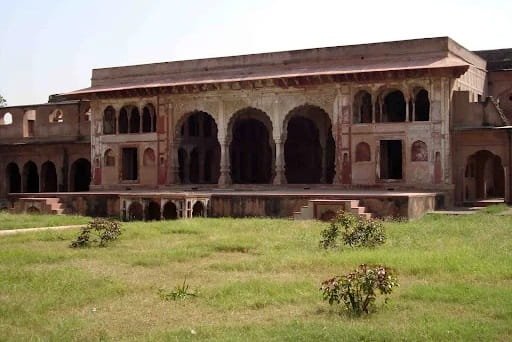
The original complex was much more extensive than the garden seen today. According to the Delhi Department of Archaeology, it was once enclosed by a wall and contained a palace and other buildings. The principal surviving elements include a gateway, mosque and baradaris or pavilions.
The garden and its buildings suffered heavily during the 1857 uprising. Government heritage documentation notes that much of the former palace complex was destroyed, leaving only fragments of what had once been a substantial royal property.
The historic entrance gateway is also recorded as a protected monument. Archaeological documentation describes its large cusped arch and notes that it once served as the entrance to Qudsia Begum’s palace.
Metro Connectivity
Kashmere Gate Metro Station
Kashmere Gate Metro Station is the most convenient Metro station for Qudsia Bagh.
The Delhi Department of Archaeology officially identifies Kashmere Gate as the nearest station and specifically mentions Gate No. 5 as a nearby landmark.
Kashmere Gate is one of Delhi Metro’s most useful interchange stations because it connects three lines:
- Red Line
- Yellow Line
- Violet Line
This provides convenient access from Central Delhi, North Delhi, Old Delhi, South Delhi, Ghaziabad-side areas and several other parts of the NCR.
Current public-transport mapping estimates Qudsia Bagh at around a 12-minute walk from the Kashmere Gate station reference point, although the actual distance depends on the exit used and the part of the garden you are visiting.
Bus Connectivity
Qudsia Bagh has excellent bus connectivity because Maharana Pratap ISBT Kashmere Gate is immediately nearby.
The National Mission on Monuments and Antiquities identifies ISBT Kashmere Gate as the relevant bus station for Qudsia Bagh.
Current transit information places the closest ISBT bus stops roughly a five-minute walk from the garden and lists numerous services connecting this transport hub with different parts of Delhi.
This is particularly useful for travellers arriving in Delhi by interstate bus. Instead of crossing the city, they can reach Qudsia Bagh on foot or take a short auto/e-rickshaw ride.
Road Connectivity
Qudsia Bagh can be approached through the road network around Kashmere Gate and Civil Lines.
Useful nearby road references include:
- Lala Hardev Sahai Marg
- Sham Nath Marg
- Boulevard Road
- Ring Road
- ISBT Kashmere Gate
- Mori Gate
Road connectivity is strong, but this part of Delhi can experience heavy traffic because of the Metro interchange, ISBT, railway station and Old Delhi commercial areas.
For visitors who already have access to Delhi Metro, travelling to Kashmere Gate by Metro is generally simpler than bringing a private vehicle into the area.
Railway Connectivity
Old Delhi Railway Station
Old Delhi Railway Station (Delhi Junction/DLI) is the nearest major railway terminal.
Both Delhi’s Department of Archaeology and the National Mission on Monuments and Antiquities identify Delhi/Old Delhi railway station as the closest railway connection for Qudsia Bagh.
Current public-transport estimates place the station at around a 16-minute walk from the Qudsia Bagh transit reference point.
Travellers carrying luggage may find an auto or cab more convenient.
New Delhi Railway Station
New Delhi Railway Station is farther away but remains useful for travellers whose trains terminate there.
From New Delhi, the Yellow Line provides a straightforward Metro connection to Kashmere Gate.
Airport Connectivity
The nearest major airport is Indira Gandhi International Airport.
Government heritage records identify IGI Airport as the airport serving Qudsia Bagh.
Travellers can use a cab for a direct journey or combine the Airport Express with Delhi Metro. A practical public-transport option is to reach New Delhi Metro Station and continue on the Yellow Line towards Kashmere Gate.
Road journey times can vary considerably because Qudsia Bagh is in the busy Old Delhi/Civil Lines belt.
Nearby Areas to Qudsia Bagh
Kashmere Gate
Kashmere Gate is immediately beside Qudsia Bagh. The area takes its name from the historic northern gateway of Shahjahanabad and is now one of Delhi’s most important transport hubs.
Civil Lines
Qudsia Bagh lies on the edge of Civil Lines, an old residential and institutional district north of the Walled City. Government heritage records formally place Qudsia Bagh in Civil Lines.
Mori Gate
Mori Gate lies nearby and provides access towards Old Delhi, Tis Hazari and surrounding commercial areas.
Tis Hazari
Tis Hazari is west of Qudsia Bagh and is particularly known for the Tis Hazari Courts complex and its Metro connectivity.
Chandni Chowk
Chandni Chowk lies south of Qudsia Bagh inside historic Old Delhi. It can be reached easily by Metro from Kashmere Gate or by road.
Places to Visit Near Qudsia Bagh
St. James’ Church
St. James’ Church is one of the closest major heritage landmarks. It stands in the Kashmere Gate area and can easily be combined with Qudsia Bagh during a heritage walk.
Kashmere Gate
The historic Kashmere Gate itself is another important nearby site associated with Delhi’s Mughal and colonial history.
Red Fort
The Red Fort lies farther south in Old Delhi. Visitors interested in Mughal history can combine it with Qudsia Bagh, although the Red Fort requires considerably more time to explore.
Chandni Chowk
Chandni Chowk offers markets, historic streets, religious landmarks and traditional food options and is easily accessible from the Kashmere Gate side.
Jama Masjid
Jama Masjid is another major Old Delhi monument that can be included in a wider heritage itinerary.
How to Reach Qudsia Bagh
By Delhi Metro
Take the Red, Yellow or Violet Line to Kashmere Gate Metro Station.
The Delhi Department of Archaeology identifies Gate No. 5 as the nearest landmark for the baradari at Qudsia Garden.
From the station, continue on foot towards Qudsia Bagh. An e-rickshaw or auto can also be used if necessary.
From Old Delhi Railway Station
Qudsia Bagh is close enough to Old Delhi Railway Station for a short road journey, and some travellers may also find walking practical without heavy luggage.
Current transit data estimates the railway station at around a 16-minute walk from the garden reference point.
From New Delhi Railway Station
Take the Yellow Line from New Delhi towards Kashmere Gate.
Get down at Kashmere Gate and walk towards Qudsia Bagh.
From Kashmere Gate ISBT
Qudsia Bagh is immediately accessible from the ISBT area. Current public-transport data places the closest ISBT stops roughly five minutes away on foot.
From Red Fort
Take an auto, cab or Metro towards Kashmere Gate. Because both attractions are in the wider Old Delhi area, they can conveniently be included in the same itinerary.
By Private Vehicle
Navigate towards Qudsia Bagh/Qudsia Garden, Civil Lines, near Kashmere Gate.
Parking and traffic can be inconvenient around Kashmere Gate, particularly during busy hours. Metro is therefore usually the easier choice for visitors coming from another Metro-connected part of Delhi.
What to Expect at Qudsia Bagh
Visitors should not expect a perfectly preserved Mughal palace complex. Most of the original structures have disappeared, and the surviving buildings represent only a portion of the garden’s former scale.
The Delhi Department of Archaeology records a gateway, mosque and two baradaris/pavilions among the surviving structures. The baradari includes stone columns and arches, with Mughal architectural details as well as later alterations associated with the colonial period.
This makes Qudsia Bagh more suitable for visitors interested in Delhi’s lesser-known history, architecture and heritage landscapes than for someone expecting a large formal Mughal garden comparable with its original 18th-century form.
FAQs About Qudsia Bagh
Q1. Where is Qudsia Bagh located?
A. Qudsia Bagh is located in the Civil Lines area of Delhi, immediately north of Kashmere Gate and the historic Walled City. Government heritage records place it on Jamuna Marg near Kashmere Gate.
Q2. Which Metro station is nearest to Qudsia Bagh?
A. Kashmere Gate is the nearest Metro station. It is an interchange for the Red, Yellow and Violet lines. The Delhi Department of Archaeology identifies Kashmere Gate Metro Station Gate No. 5 as the nearest landmark for the historic baradari.
Q3. Who built Qudsia Bagh?
A. Qudsia Bagh was built around 1748 by Qudsia Begum, mother of Mughal emperor Ahmad Shah Bahadur. It originally formed a much larger riverside garden and palace complex.
Q4. Which railway station is nearest to Qudsia Bagh?
A. Old Delhi Railway Station, also called Delhi Junction, is the nearest major railway terminal. Government heritage records identify it as the closest railway station to Qudsia Bagh.
Q5. What can visitors see at Qudsia Bagh?
A. Surviving heritage features include an old gateway, a mosque and baradari structures. Much of the original palace and garden complex disappeared or was damaged over time, particularly during the events of 1857.
Q6. Is Qudsia Bagh close to Kashmere Gate ISBT?
A. Yes. Qudsia Bagh is very close to Maharana Pratap ISBT at Kashmere Gate. Current transit information places the nearest ISBT stops at roughly a five-minute walk from the garden.